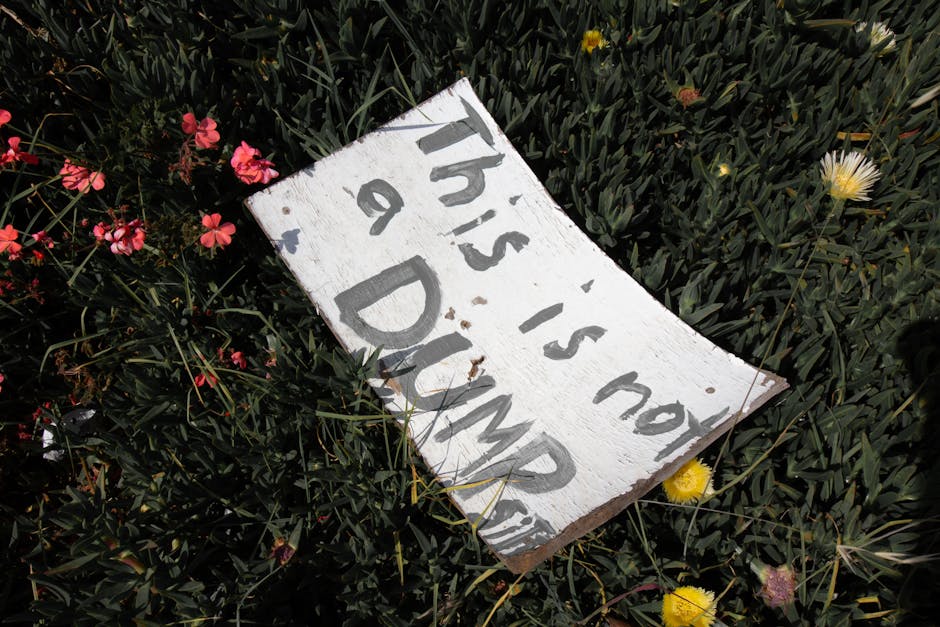
Fines for Illegal Dumping in Herne Hill: Local Law Explained
Illegal dumping is one of those issues that looks small at first glance - a bag left beside a wall, an old sofa dumped near a kerb, a pile of builders' rubble "just for now". But in Herne Hill, it can quickly turn into a serious enforcement matter. If you are trying to understand fines for illegal dumping in Herne Hill: local law explained, the short version is this: fly-tipping is taken seriously, responsibility can fall on the person who dumped the waste, and sometimes on the person who arranged it or failed to check their carrier properly. No one wants a knock on the door about rubbish, especially not for something that could have been handled cleanly in the first place.
This guide breaks down what illegal dumping means, how enforcement generally works in London, what kind of penalties you may face, and how to avoid trouble. It also explains the practical side - what to do if waste has been dumped on your property, how to choose the right disposal route, and where services like waste removal or recycling and sustainability practices can help keep you on the right side of local rules.
Contents
- Why fines for illegal dumping in Herne Hill matter
- How the law and penalties generally work
- Key benefits of understanding the rules early
- Who needs this information and when it matters
- Step-by-step guidance if you are dealing with waste
- Expert tips for staying compliant
- Common mistakes to avoid
- Tools, resources and recommendations
- Law, compliance, standards and best practice
- Options and comparison table
- Case study or real-world example
- Practical checklist
- Conclusion
- Frequently asked questions
Why Fines for Illegal Dumping in Herne Hill: Local Law Explained Matters
Herne Hill sits within a busy London environment where waste can appear and disappear fast: household clear-outs, shop refits, flat moves, garden work, and small building jobs all create material that has to go somewhere. When it is left in an alley, on a pavement, beside a parked car, or near shared bins, that is where the trouble starts. Local authorities and enforcement teams view dumped waste not just as an eyesore, but as a public health, safety, and environmental issue.
To be fair, many people do not set out to break the rules. They may hand waste to a cheap operator, assume someone else will sort it, or leave a few items outside thinking collection will happen later. But that "later" can become a fixed penalty notice, a liability dispute, or a mess for the neighbours. And once the waste is there, the person whose details are traceable may still need to explain how it got there.
That is why the topic matters. Understanding illegal dumping fines is not just about avoiding punishment. It is about protecting yourself, keeping your street tidy, and making better disposal decisions before a problem forms. In an area like Herne Hill, where residential streets, flats, side roads, and mixed-use properties often sit close together, one careless disposal choice can affect a lot of people very quickly.
How Fines for Illegal Dumping in Herne Hill: Local Law Explained Works
In plain English, illegal dumping - often called fly-tipping in the UK - means leaving waste somewhere it should not be left, without permission or lawful authority. That can include household rubbish, furniture, builder's waste, garden debris, electrical items, mattresses, or commercial waste. The exact enforcement route depends on the circumstances, but the logic is usually similar: if waste is dumped unlawfully, the council or enforcement body may investigate, and penalties may follow.
The process often begins with a report, a patrol observation, or evidence found with the waste. That evidence might be an address label, invoice, packaging, a delivery note, or something else that points to the source. In everyday life, people are often surprised by how ordinary the evidence can be. A torn envelope, a receipt from a job, a bin-bag with a business logo. Tiny details. Annoyingly tiny, sometimes.
There are different ways an issue can be handled, depending on seriousness and evidence. In broad terms, penalties may involve:
- a fixed penalty notice for lower-level offences;
- an investigation that could lead to a higher fine if the case is prosecuted;
- the cost of clearing the waste, which may be charged separately in some situations;
- additional consequences if a business, property owner, or landlord failed to take reasonable care.
The practical point is this: even if you did not personally leave the waste in the exact spot, your role in the chain matters. If you arranged a clearance but failed to check the operator, or you told someone to take it away without verifying disposal, that can become a problem. That is why lawful disposal and proper record-keeping are so important.
If you are handling bulky items or a full property clear-out, using a reputable clearance route matters more than saving a few pounds. Many residents prefer structured options like house clearance, flat clearance, or office clearance because they reduce the risk of waste ending up where it should not.
Key Benefits and Practical Advantages
Knowing how illegal dumping fines work gives you more than legal awareness. It gives you control. And in waste management, control is the difference between a simple tidy-up and a very expensive headache.
- You avoid accidental liability. If you know what makes disposal lawful, you are less likely to hand waste to the wrong person.
- You protect your reputation. This matters for landlords, businesses, tradespeople, and anyone managing a shared property.
- You save time. Dealing with enforcement, evidence, and clean-up is far slower than arranging proper disposal in the first place.
- You reduce neighbour disputes. Dumped waste creates friction fast. A tidy, timely clearance avoids awkward conversations in stairwells and front gardens.
- You support safer streets. Illegal dumping often attracts more dumping, pests, and sharp or hazardous debris. It snowballs.
There is also a quieter benefit: peace of mind. Truth be told, people sleep better when they know the waste has gone through the correct route and there is no mystery about where it ended up.
For some jobs, especially after decorating, construction, or a major clear-out, using a planned service such as builders waste clearance can be a smart way to avoid risky shortcuts.
Who This Is For and When It Makes Sense
This topic is relevant to more people than you might think. It is not just for people who have actually been fined. It is for anyone who deals with waste, especially in a densely lived part of London where shared spaces and narrow access points make disposal more complicated than it sounds.
You may need this guidance if you are:
- a homeowner clearing a loft, garage, or spare room;
- a tenant moving out of a flat;
- a landlord managing an end-of-tenancy clearance;
- a small business owner dealing with office furniture or packaging;
- a contractor generating rubble, timber, or demolition waste;
- someone who has discovered dumped waste on their property or nearby land;
- a person trying to avoid using an unlicensed or careless waste carrier.
It also makes sense if you are comparing whether to hire a removal service, book a skip, take items yourself, or split waste across several trips. Each option has compliance implications. Some are fine in one situation and awkward in another. For example, a small amount of bagged household rubbish is not the same as broken plasterboard, paint tins, or a dismantled sofa. Different waste types, different handling expectations.
If you are dealing with household items specifically, the right route may be a dedicated service such as furniture disposal or furniture clearance, rather than leaving bulky pieces out with a note and hoping for the best. Hope is not a waste plan. Not really.
Step-by-Step Guidance
If you want to stay clear of illegal dumping fines in Herne Hill, use a simple and methodical approach. It is not glamorous, but it works.
- Identify the waste correctly. Separate household items, business waste, garden cuttings, builders' rubble, and anything hazardous. Mixed waste is harder to manage and easier to mishandle.
- Check whether the items need special handling. Some waste, such as electrical goods, sharp objects, paint, or contaminated materials, may need extra care.
- Decide who is responsible for the disposal. If you are hiring someone, make sure you understand their role and what happens to the waste after collection.
- Choose a lawful route. That may be a legitimate clearance service, a council-approved disposal option, or another compliant method suitable for the waste type.
- Keep basic records. Save invoices, messages, and any written confirmation. If questioned later, evidence matters.
- Do not leave waste outside unless collection is confirmed. That one sounds obvious, yet it is a common mistake.
- Follow up if the waste is not removed as planned. Delays happen, but unattended rubbish can become a liability quickly.
A useful rule of thumb: if you would not be comfortable explaining the disposal arrangement to a neighbour, landlord, or enforcement officer, it probably needs tightening up.
For bigger clearances, a planned route such as home clearance or garage clearance can be much easier than trying to improvise with car boot trips and wishful thinking.
Expert Tips for Better Results
Experience teaches a few simple things that are easy to overlook when you are in a hurry.
Tip 1: Ask what happens after collection. A good operator should be able to explain whether waste will be reused, recycled, or disposed of responsibly. That does not need to be a long lecture. Just a clear answer.
Tip 2: Be cautious with "too cheap" offers. Illegal dumping often starts with a bargain that is suspiciously cheap. If the price sounds unrealistic, ask more questions. Cheap rubbish can become expensive rubbish very quickly.
Tip 3: Separate reusable items from waste. You may reduce costs and reduce landfill pressure. A chair in good condition is not the same as broken chipboard and plaster dust. They should not be treated the same way.
Tip 4: Make access easy. In Herne Hill, narrow entrances, stairs, and shared hallways can slow a job down. Clear the route first. It saves time and reduces the risk of items being abandoned halfway through.
Tip 5: Match the service to the waste. A general waste service may not be the best fit for a loft full of old furniture, and a domestic clearance is not the same as a commercial office clear-out. Using the right service reduces both risk and hassle. If you are sorting a workplace, business waste removal is often more appropriate than ad hoc disposal.
Small choice, big consequence: the cheapest disposal option is rarely the one that costs least in the end.
Common Mistakes to Avoid
Most fly-tipping problems are not dramatic. They are mundane. That is what makes them so avoidable.
- Leaving bags beside bins. Even if you meant them for collection, they can be treated as dumped waste if left in the wrong place.
- Using unverified carriers. If you cannot trust where the waste is going, you should not hand it over.
- Assuming someone else is responsible. Shared properties are full of this problem. Everyone thinks someone else sorted it. Nobody did.
- Dumping garden waste in a communal or public area. Branches, soil, and green waste can still be illegal to leave without permission. Garden debris is waste too.
- Mixing different waste types together. It makes compliant disposal harder and often more expensive.
- Not keeping proof. If there is ever a complaint, proof of lawful disposal is worth its weight in gold. Well, nearly.
One particularly common scenario is a quick clear-out before a move. People rush, the van turns up late, items get put outside "temporarily", and by the evening the street looks like a mini dump site. That can happen in one afternoon.
Tools, Resources and Recommendations
You do not need fancy tools to avoid illegal dumping. You need organisation, common sense, and a few practical habits.
- Photo record: Take pictures of waste before and after clearance. Handy for landlords, businesses, and anyone managing shared spaces.
- Written confirmation: Keep emails or messages about collection dates and what is being removed.
- Waste separation bags or boxes: Keep items sorted from the start so nothing is missed or mixed by accident.
- Clear access space: Hallways, pathways, and entrances should be kept open for safe removal.
- Recycling plan: If some items can be reused or recycled, it is worth directing them that way. The environmental difference can be significant.
For residents who want a more responsible route, our recycling and sustainability approach is a useful benchmark for how waste should be treated - with care, not just speed.
If you are comparing costs, the pricing page is often the sensible next stop. You can review pricing and quotes before deciding how to handle a clearance job. That way you are comparing like with like, rather than guessing based on a van in the street and a verbal promise.
Law, Compliance, Standards, or Best Practice
In the UK, the legal framework around waste is built around responsibility, traceability, and proper transfer of waste to authorised handlers. The exact penalties and enforcement route can vary depending on the case, the evidence, and whether the waste came from a household, a business, or a construction activity. Because of that, it is wise to treat any fine or enforcement issue seriously and not assume it will go away on its own.
Best practice usually includes:
- using a legitimate, appropriately equipped waste carrier;
- checking what type of waste is being handled;
- keeping records of collection or transfer;
- preventing waste from being left unattended in public or shared spaces;
- separating recyclable and reusable items where practical;
- making sure hazardous or awkward materials are dealt with safely.
If a case does arise, the most sensible response is calm, documented, and prompt. Avoid arguing from memory. Pull together dates, messages, photographs, and any paperwork you have. Small details matter here. They often decide the story that gets told.
For businesses in particular, poor waste handling can be a compliance issue as well as an operational one. A tidy office move, fit-out, or stock clear-down should be planned, not improvised. Services like office clearance and business waste removal can help reduce the risk of accidental non-compliance.
Options, Methods, or Comparison Table
There are several ways to manage waste in Herne Hill, and the right option depends on volume, type, access, and urgency. Here is a simple comparison.
| Option | Best for | Strengths | Watch-outs |
|---|---|---|---|
| Self-haul to an authorised facility | Small volumes, straightforward waste | Direct control, clear traceability | Time-consuming, vehicle limits, sorting needed |
| Book a clearance service | Bulky, mixed, or time-sensitive waste | Convenient, less manual work, easier planning | Quality depends on the operator |
| Skip hire | Projects with ongoing waste generation | Useful for builders or longer jobs | Space, permits, and loading discipline matter |
| Leaving waste out for an informal collection | Nothing, really | Only looks easy | High risk of dumping issues and fines |
For many households, a proper clearance service is the sweet spot. It is usually the least stressful option when the job involves stairs, heavy furniture, or several categories of waste. If you are already feeling overwhelmed, that is normal. Waste jobs have a way of becoming bigger than they first look.
Case Study or Real-World Example
Imagine a resident in Herne Hill clears out a spare room after a move. There are old shelves, a broken chair, a mattress, and several bags of mixed rubbish. A friend offers to take it away cheaply. The items are put outside the property on Friday evening, and by Saturday morning some of it is still there, with more rubbish added by other passers-by. Suddenly, what looked like a simple favour becomes a neighbourhood mess.
Now compare that with a planned clearance. The waste is sorted on-site, reusable furniture is separated, collection is arranged properly, and the route out of the property is kept clear. There is paperwork. There is a clear date. The waste is removed without leaving a trail behind. Same room, same items, totally different outcome.
That small difference is why people get caught out. It is rarely the size of the rubbish. It is the process.
Practical Checklist
Use this checklist before you hand over any waste or leave anything outside.
- Have I identified exactly what the waste is?
- Does any item need special handling or separation?
- Have I confirmed who is taking it and where it is going?
- Do I have written confirmation, a receipt, or other proof?
- Is the collection time definite, not vague?
- Will the waste be left in a legal place until collection?
- Have I checked access so items can be removed safely?
- Am I mixing household, business, and builders' waste without planning?
- Do I know what will happen if the collection is delayed?
- Would I be comfortable explaining this arrangement if asked later?
If you can tick most of those boxes, you are in much better shape. If not, pause and tighten the plan before anything goes outside.
When the job is larger or more complex, consider whether a specialist route such as loft clearance, garage clearance, or garden clearance is the cleaner and safer option.
Conclusion
Illegal dumping fines in Herne Hill are not something to shrug off. They exist because dumped waste creates visible mess, safety risks, and real costs for everyone nearby. The good news is that most problems are avoidable with a little planning, basic record-keeping, and a proper disposal route.
Whether you are dealing with a single bulky item or a full clear-out, the safest approach is the one that leaves no ambiguity about responsibility. That means checking who is collecting the waste, understanding where it is going, and choosing a service that fits the job. Simple enough, really - though in practice, a lot of people only realise that after the bin bags are already on the pavement.
If you are comparing lawful disposal options or trying to organise a tidy, compliant clearance in the area, start by looking at the services and information that support a more responsible process. A calmer, cleaner result usually begins with one sensible decision made early.
Get a free quote today and see how much you can save.
And if there is one final thought to keep with you, it is this: a careful disposal plan protects more than your wallet - it protects the street you live on, too.
Frequently Asked Questions
What counts as illegal dumping in Herne Hill?
Illegal dumping usually means leaving waste somewhere without permission or lawful authority. That can include household rubbish, furniture, garden waste, builders' debris, and business waste. Even one bag can count if it is left in the wrong place.
Can I be fined if someone else dumped waste for me?
Potentially, yes, depending on the circumstances and evidence. If you arranged the disposal or failed to check the carrier properly, you may still face questions. That is why record-keeping matters.
How much are fines for fly-tipping?
The amount can vary depending on the seriousness of the case and how it is handled by the relevant authority. Lower-level cases may involve a fixed penalty, while more serious matters can lead to prosecution and higher costs.
What should I do if I find dumped waste outside my property?
Take photos, note the time, and report it through the proper local channel if needed. Do not move unknown hazardous items by hand unless it is safe and you know what they are. Broken glass, needles, and chemicals are not worth improvising with.
Does garden waste count as illegal dumping?
Yes, it can. Grass cuttings, branches, soil, and hedge trimmings are still waste if they are left in a public or unauthorised place. Green waste is not automatically harmless just because it is organic.
Is it illegal to leave items beside the bins?
If they are not part of a lawful collection arrangement, yes, it can be treated as dumping. Shared-bin areas are a common flashpoint, especially in flats and converted properties.
What records should I keep after arranging a clearance?
Keep invoices, messages, collection confirmations, and any notes about the type of waste removed. If anything is questioned later, paperwork is your friend.
How can I tell if a waste carrier is legitimate?
Ask direct questions about how the waste is handled, what type of material they collect, and whether they can provide written confirmation. If anything feels vague, take that seriously. Very seriously.
Is a cheap clearance always risky?
Not always, but unusually cheap quotes deserve scrutiny. The lowest price may not include proper disposal, and that is where illegal dumping risks often begin.
What is the safest way to get rid of bulky furniture?
Use a proper furniture clearance or furniture disposal service, or another lawful disposal route that suits the item. Bulky pieces can be awkward to move, and they are often the first thing to end up abandoned if a plan is unclear.
Do businesses face different expectations from households?
Yes. Businesses are generally expected to manage waste carefully, keep records, and avoid informal disposal. Office moves, shop clear-outs, and trade waste should all be handled in a controlled way.
Where can I learn more about responsible waste handling?
Look at the information on recycling and sustainability and related service pages to understand cleaner disposal choices. If you need specific support, a structured service can save a lot of hassle and uncertainty.